
- Stranding onsets are most frequently observed near low tide under onshore winds.
- Stranding clusters within certain low-tide cycles, not uniformly over time.
- Onshore winds enhance coastal retention, increasing intertidal stranding.
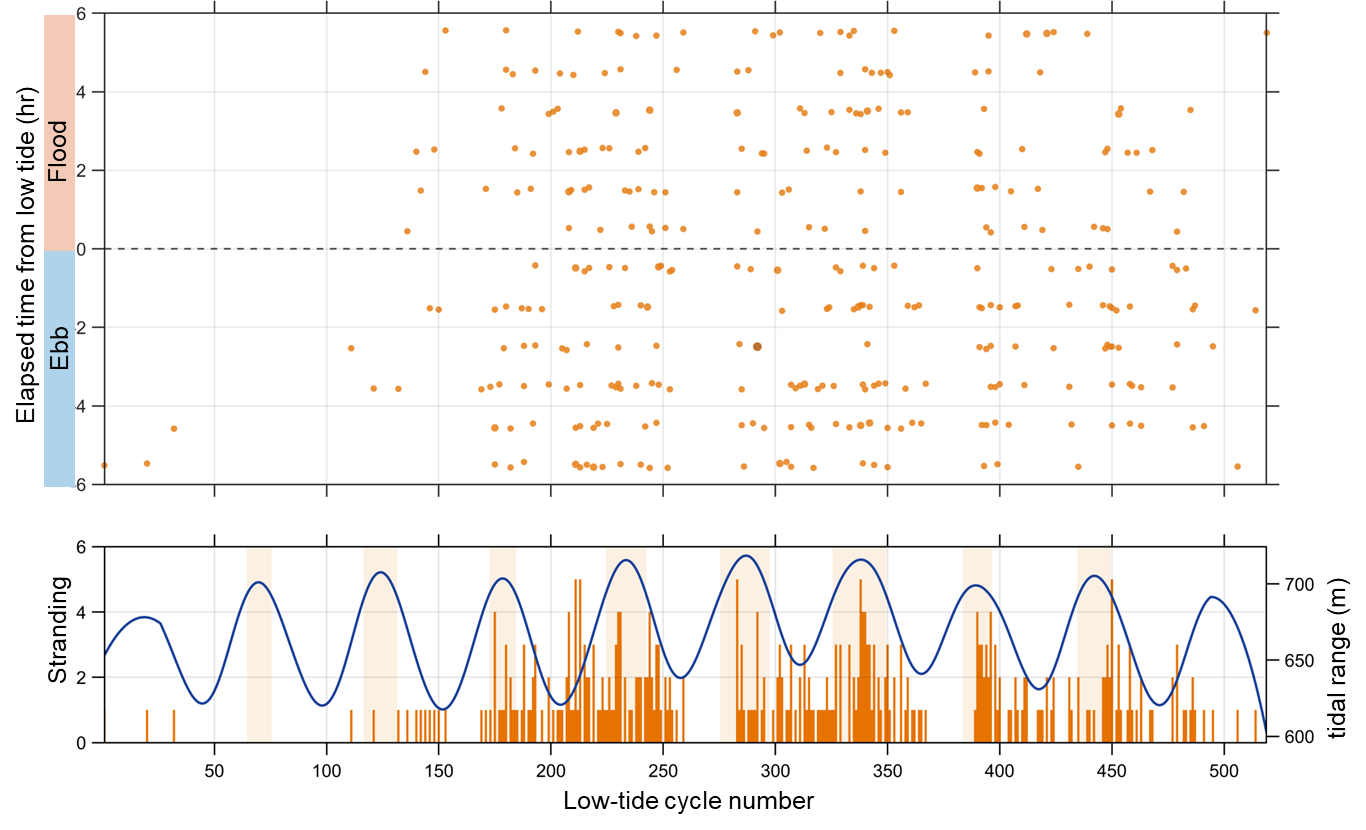
Figure 1. Tide-referenced distribution of GPS drifter stranding onsets
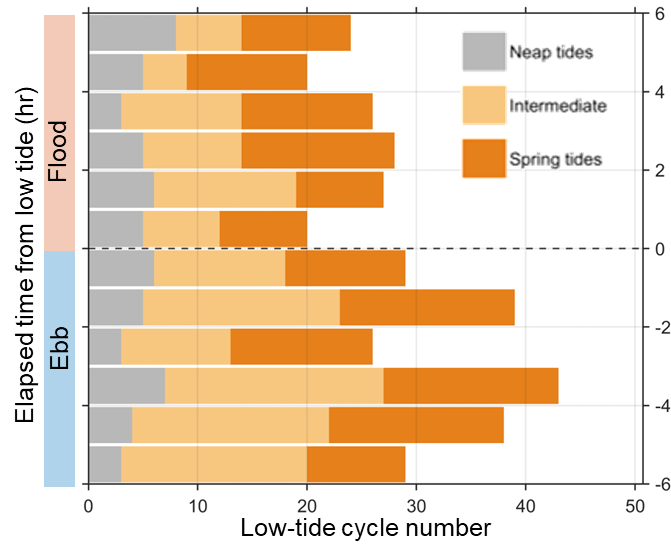
Figure 2. Tide-referenced spring–neap modulation.
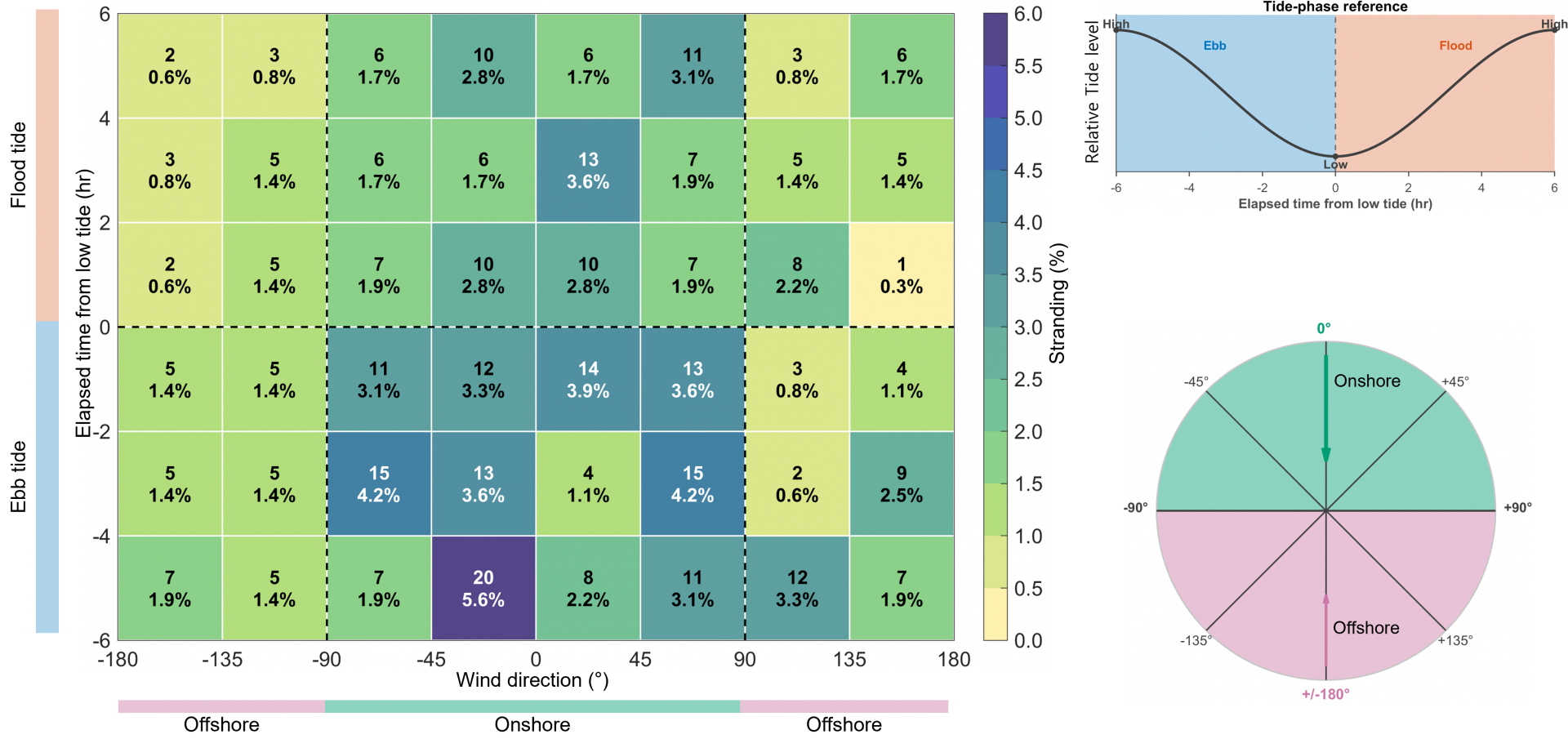
Figure 2. Joint distribution of stranding onsets by tide phase and onshore/offshore wind conditions.
This study examines the timing and environmental conditions associated with GPS drifter stranding in a macrotidal coastal environment (Gyeonggi Bay). Stranding onset times are referenced to the nearest low water (0 hr), where negative elapsed times represent the ebb phase and positive elapsed times represent the flood phase. This tide-phase reference enables consistent comparison of stranding events across the full observation period and across multiple low-tide cycles.
The tide-referenced results show that stranding onsets are not uniformly distributed within the tidal cycle. Instead, events tend to cluster within specific low-tide cycles, suggesting that stranding reflects a combination of tidal timing and episodic external forcing rather than tides alone. Stratification by spring–neap conditions further indicates that tidal regime modulates the frequency of stranding occurrence.
The joint distribution analysis evaluates stranding onsets as a function of both tide phase and wind direction defined relative to the coastline. Wind is classified as onshore when its component is directed toward the coast and offshore when directed seaward (as illustrated in the inset references). Under this physically based reference frame, stranding onsets are most frequently observed near low tide under onshore wind conditions. This pattern is consistent with a process-based interpretation in which onshore winds promote coastal approach and retention, while low tide increases the likelihood of intertidal exposure and reduced mobility, together favoring the initiation of stranding events.
- 사업명
- 한강하구 쓰레기 거동 특성 분석 및 저감 방안 연구용역
- 발주처
- 인천광역시